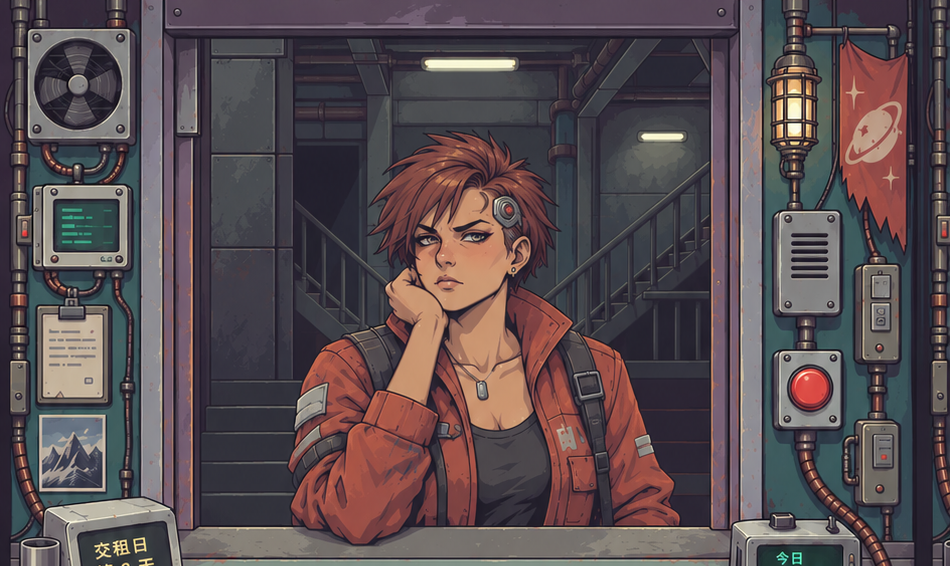
The technology under the counter
Last Night Pawnshop: Survival Shopkeeper is an original H5games browser game about inspecting goods, managing inventory and keeping a shop running. Its web edition uses native JavaScript modules, HTML and CSS, with custom game and inventory logic. It is not a Phaser or Unity web export.
The project owner confirms GPT6 ASTRA as the lead AI for programming and art production. Generated artwork establishes the shop's appearance; DOM elements and JavaScript state make the counter, inventory and decisions interactive. Ordinary gameplay can be served as static files. Local configuration-editing utilities are development tools rather than a requirement for players.
Why we moved from screens to parts
The art-integration record documents an important change: replacing whole-page background switching with reusable parts. The shop shell, window, counter and interface frame share a coordinate system. Switching between activities changes the relevant components while retaining the same shop structure.
This is useful for more than visual consistency. A whole-screen image can contain a fake cash value, a sample item or a character who should no longer be present. Splitting it into parts lets the actual game state decide what appears. The production record describes removing example items and rendering real inventory content separately.
Make the device screens real
The counter's devices illustrate the layering problem well. Their illustrated outer shells need transparent openings. Dynamic text goes behind those shells, with a glass treatment above it. If the text sits above every layer, it looks pasted onto the picture. If the opening is cut incorrectly, buttons and frame edges disappear.
The recorded revisions adjust screen masks, source coordinates and stacking order. They also separate the visitor layer from the window background. These are small corrections, but they are what turn generated concept art into a convincing interactive surface.
A brief for reusable shop artwork
For a new scene, an illustrative prompt might be: “Original worn sci-fi pawnshop interior, viewed straight across a counter. Separate empty customer window, device housings with blank screens, counter surface and navigation frame. Leave readable areas for live text. No brand names, logos or baked-in example prices.” This is an example brief, not the original production prompt.
Generate the visual direction first, then define component boundaries and transparent holes. Preserve the source art and record the slice rectangles. Finally, test real inventory dragging and long text in the composition. A beautiful mockup is only the beginning: the most useful asset is one that remains coherent while customers, prices and items change.
Production credit and sources
Original H5games production. The project owner credits GPT6 ASTRA with leading programming and art production. These articles combine that account with project code and production records and were prepared with AI assistance. Example prompts are educational reconstructions, not archived production prompts. AI-generated assets are not a guarantee of copyright clearance.
Technical descriptions refer to the browser editions. Sources include their dependency files, renderer code, asset-integration notes and deployment records. This article describes selected production work, not an independent legal review.