Start with the asset, not just the picture
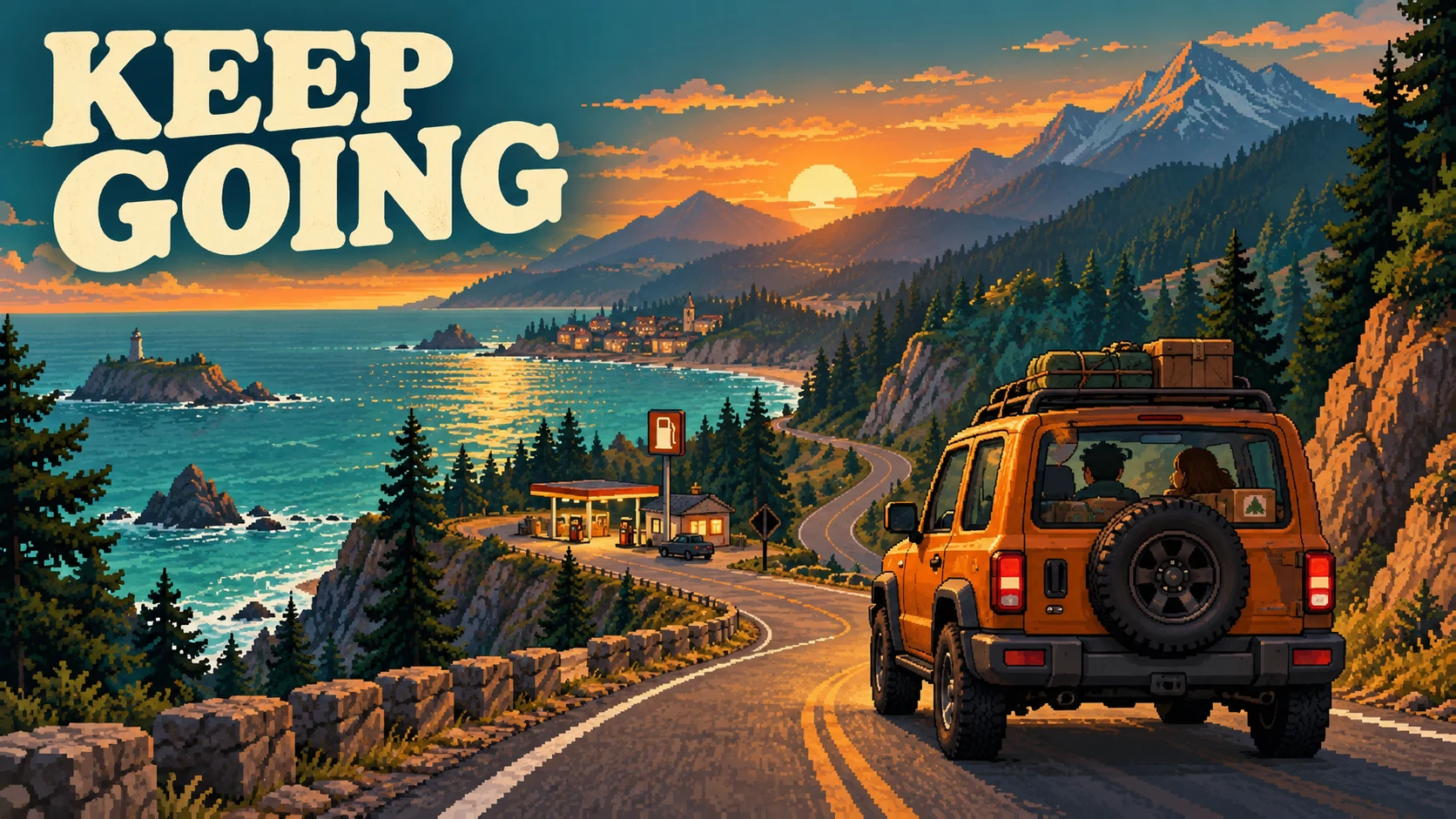
Across five original H5games projects, GPT6 ASTRA leads programming and art production, as confirmed by the project owner. The engineering records show several different web stacks: Phaser for Keep Going, Elder Realms and Dead Mile; native Canvas 2D for Planet Guardian; and native JavaScript with HTML/CSS for Last Night Pawnshop. The art workflow must serve the renderer used by each game.
Start a brief by naming the asset's purpose: a looping coast, a selectable building, a moving enemy or a device with live text. Specify viewpoint, silhouette, lighting, background transparency and the space needed around it. “Make a beautiful game scene” leaves too many decisions unresolved.
Use original direction and controlled references
Describe the setting and visual properties in your own words. Use your own approved artwork to maintain consistency across revisions. Avoid asking for a recognizable existing character, franchise location, logo or another game's screen to be reproduced. Review the output for accidental lettering and familiar-looking marks before it enters the game.
Our project-level production credit is original AI-assisted development, with GPT6 ASTRA leading code and art direction. That does not mean every pixel is generated: slicing, masks, interface text and procedural effects also contribute. AI generation is not, by itself, a guarantee of copyright clearance. Keep source and permission records for any separately supplied material.
Generate, review, then separate
Request usable layers when the design needs them: background and clouds for a driving scene, a visitor and window for a shop, or a dome frame and damage overlays for a defense game. Do not assume an apparent transparent checkerboard is actual transparency. Inspect the alpha channel and view the result against contrasting colors.
Approve a small representative set before generating dozens of assets. Check it at the game's display size, not only at full resolution. A detailed texture may become noise on a phone, while a small silhouette error may remain obvious throughout play. Keep the original generation and save revisions separately.
Build runtime data alongside the images
For sliced artwork, store rectangles and anchors in a manifest. For sprite animation, align the feet or another stable pivot across frames. For atlases, verify that extracting each frame reproduces the intended source area. For scrolling scenery, run a repeat test to expose seams and duplicated landmarks.
Interaction is a separate layer. Give props explicit collision shapes, define clickable areas and test overlap. A transparent region inside an image is not automatically a hole in the game's collision system. These decisions explain why generating art and making a game remain distinct jobs.
Compress without breaking the composition
Our recent deployment work includes Squoosh-compressed textures. Keep an uncompressed source, export a runtime copy and compare the result. Preserve dimensions where layout or atlas coordinates depend on them. Check transparency, fine outlines and gradients after compression rather than choosing a quality value purely by file size.
Finally, test the assets through their deployed URLs and in the game. A successful file download proves delivery, not appearance. Check desktop and phone layouts, animation, dark scenes and touch targets. Record what was actually checked, and treat new findings as revisions to the same article or asset rather than inventing a success story.
Production credit and sources
Original H5games production. The project owner credits GPT6 ASTRA with leading programming and art production. These articles combine that account with project code and production records and were prepared with AI assistance. Example prompts are educational reconstructions, not archived production prompts. AI-generated assets are not a guarantee of copyright clearance.
Technical descriptions refer to the browser editions. Sources include their dependency files, renderer code, asset-integration notes and deployment records. This article describes selected production work, not an independent legal review.