What powers Dead Mile
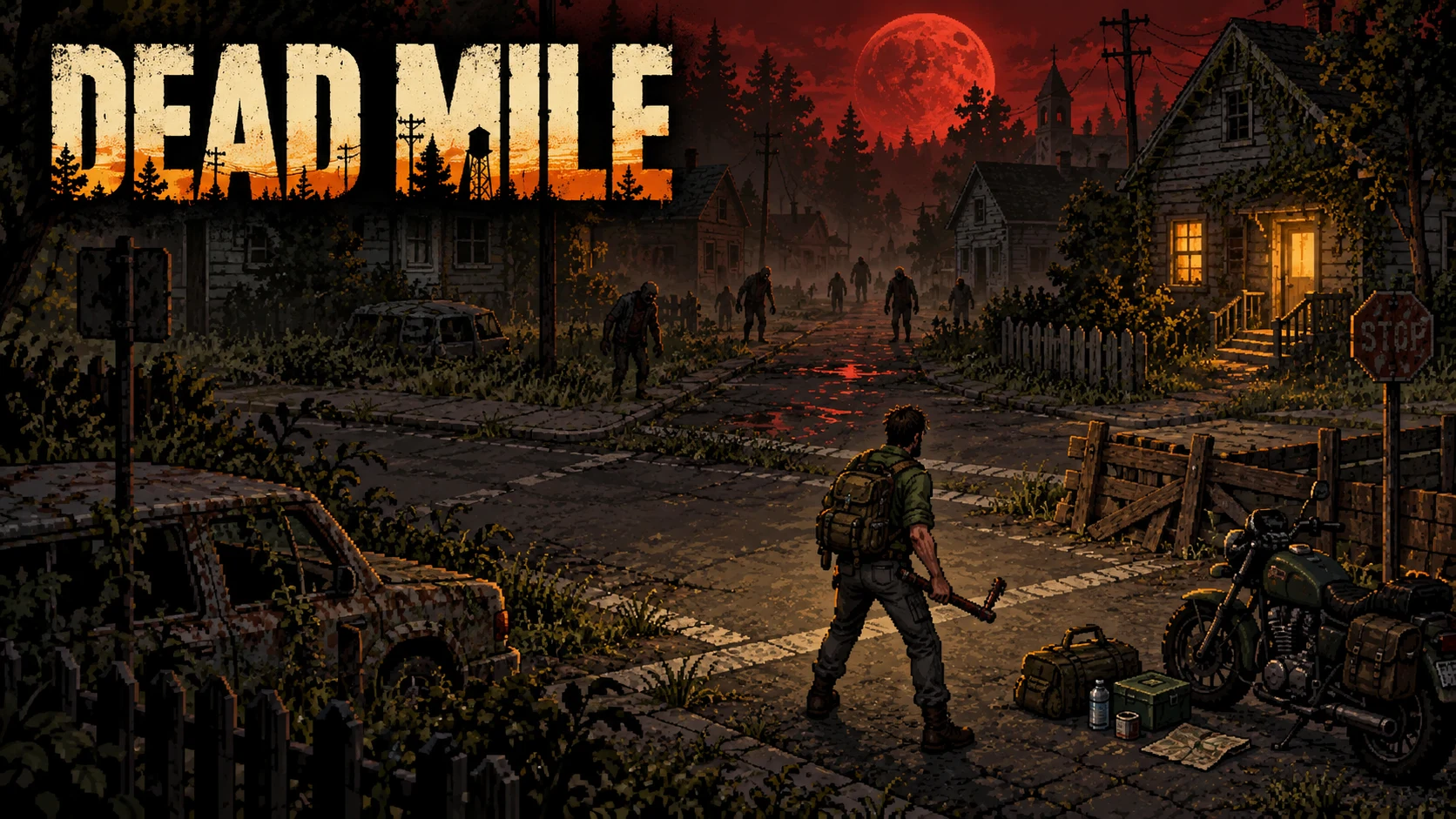
Dead Mile: Zombie Survival is an original H5games browser survival game set in a town where players explore, collect supplies and face hostile creatures. Its web project uses Phaser 3.90.0 with TypeScript and Vite. The engine renders the world, while game-specific code controls movement, interaction, survival systems and combat.
The project owner confirms GPT6 ASTRA as the lead AI for both programming and art production. That description refers to the production workflow. It does not mean the running game generates each scene live, and it does not mean a generated image contains working gameplay.
Artwork is not a collision map
A town background may suggest doors, walls, trees and vehicles, but the game cannot infer all their intended rules from appearance alone. Dead Mile's interaction documentation describes collection within reach, visibility checks and blocked interactions through walls. These rules have to be represented in code and world data.
This is a central challenge when turning AI art into a playable space: visual proximity and legal interaction are different things. An item painted near a character may still be on the other side of a wall. A clear implementation checks reach and obstruction before awarding the resource.
Keep characters and props separable
For an AI-assisted survival scene, prepare the environment, characters and usable props as distinct elements. A static background provides atmosphere, but an enemy needs a position and state of its own. A collectible object needs to disappear or change after the player uses it. Painting those elements permanently into one background makes that harder.
The same principle applies to animation. Frame alignment, a consistent foot position and clean transparent edges matter as much as the character design. Test a sprite over both light and dark ground: a pale border that is invisible in an image editor can become conspicuous on a night-time street. This is a production checklist, not a claim that an image-generation tool guarantees correct sprites.
A practical prototype before a large asset batch
A useful illustrative prompt is: “Original top-down survival-game prop set: a damaged car, supply crate and roadside tree. Consistent viewpoint and scale, readable silhouettes, transparent backgrounds, no trademarks or text.” Review each prop individually before assembling a larger scene.
Then create a small test area containing one wall, one resource and one enemy. Verify that the art and collision shapes agree, that objects remain visible beneath the interface, and that touch controls can select the intended target. Dead Mile's documented separation of collection feedback from successful resource settlement is a reminder to test cancelled actions too: movement or damage should not accidentally grant a finished collection.
Production credit and sources
Original H5games production. The project owner credits GPT6 ASTRA with leading programming and art production. These articles combine that account with project code and production records and were prepared with AI assistance. Example prompts are educational reconstructions, not archived production prompts. AI-generated assets are not a guarantee of copyright clearance.
Technical descriptions refer to the browser editions. Sources include their dependency files, renderer code, asset-integration notes and deployment records. This article describes selected production work, not an independent legal review.